


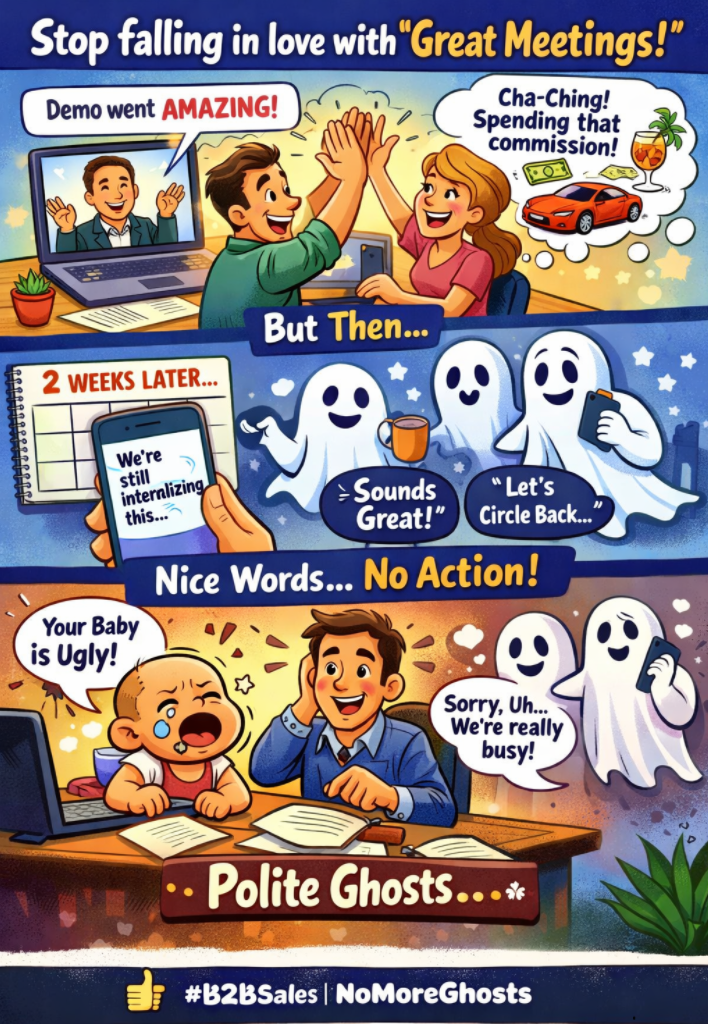
In the world of B2B sales, “No” is a gift. It’s “Maybe” that kills you.
We’ve all experienced the “Perfect Demo.” The prospect is engaged. They nod. They say, “This is exactly what we’ve been looking for!” You hang up, update your CRM to 80% probability, and start planning for the rollout.
Then, the silence starts.
A week goes by. Then two. You follow up, and they reply with a polite, “Still discussing internally, sounds great though!”
Here is the hard truth: They aren’t “internalizing.” They are being polite.
In B2B, people hate being the “bad guy.” They don’t want to tell you they don’t have the budget, or that their boss already said no. So, they keep you “busy” instead of keeping you “profitable.” They become Polite Ghosts.
The High Cost of Being Nice
When your pipeline is full of “Polite Ghosts,” you aren’t just losing deals—you’re losing time.
- Your sales reps waste hours on “zombie deals.”
- Your revenue forecasts become total fiction.
- Your real prospects get less attention because you’re chasing people who will never sign.
5 Ways to Score “Real Intent” YourselfDetecting the difference between a “Fan” and a “Buyer” is an art form. If you want to start scoring intent yourself, look for these 5 signals:
1. The “Stakeholder Gravity” Test Is the prospect keep the conversation “1-on-1”? True buyers bring in the “uncomfortable” people—Finance, Legal, or the grumpy IT lead. If they won’t introduce you to the person who holds the wallet, they don’t have the intent to buy.
2. Shift from “Product” to “Process” A “Polite Ghost” asks how the tool works. A “Buyer” asks how the tool integrates. Look for questions about implementation, data migration, and security. If they aren’t worried about the “how,” they aren’t serious about the “what.”
3. The Social Capital Metric Buying software is a risk for the prospect. Ask them to do something “hard” before the deal is signed. Have them fill out a detailed requirements doc or get a sign-off from another department. If they won’t spend their “social capital” internally, they won’t spend their budget.
4. Language Ownership Listen to the pronouns. Polite ghosts say: “Your tool is great.” Real buyers say: “Our team could use this to solve X.” When they start using “We” and “Us” in relation to your product, they have mentally already bought it.
5. The “Negative Space” (Timing) Real deals have friction. If a prospect agrees to everything and never pushes back on price or terms, be suspicious. True intent usually comes with a bit of “healthy conflict” as the prospect tries to make the deal work for their specific constraints.
Why “Doing it Yourself” is a Trap
While these tips help, the reality is that humans are really good at being polite. Professional buyers are trained to keep their cards close to their chest. Manually scoring intent based on “gut feeling” is exhausting, inconsistent, and often wrong.
This is where HumintyX Science™ steps in.
We don’t guess. We use Human Signals Intelligence™ to analyze the subtle shifts in tone, the timing of replies, and the “Micro-Fractures” in communication that the human eye misses. We see the “Intent Drift” months before your CRM shows a problem.
Don’t let your pipeline be a graveyard for polite ghosts. Let us help you find the real commitment hidden behind the “Sounds great!”
Explore HumintyX Solutions | Schedule an Intent Audit
